Showing posts with label eggs. Show all posts

Friday, April 10, 2009

Fear not the Souffle

Souffles aren't that hard to make. Stop laughing. I promise you, if you can bake muffins, scramble an egg, or make macaroni and cheese, you can bake a souffle. It's even easier when you're baking that souffle as part of a casual dinner for you and your sweetie and not trying to impress dinner guests company. (You can impress dinner guests after you've practiced a few times.)

When preparing a classic dish like this, I feel it's best to turn to a trusted guide. Who's more trusted than Julia Child when it comes to classic French dishes? Julia's voice is so comforting and she's also realistic. In her book From Julia Child's Kitchen she outlines, in great detail (four full pages!), how to make a cheese souffle. In addition to Gruyere She mentions several other great cheese options including cheddar (which she says "... makes a fine souffle with excellent flavor, but it is a strictly American taste.")

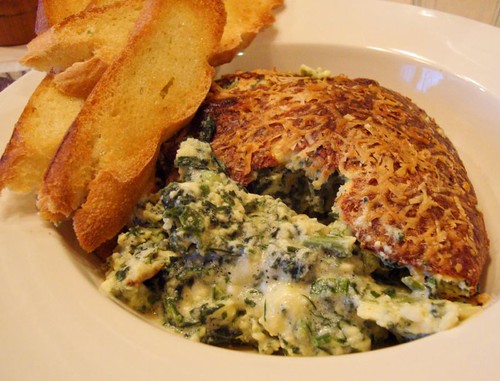
I had extra filling from making spinach pie so I thought I'd make a spinach souffle for supper. With some toast and a little salad it was a delicious and comforting dinner. A nice thing about souffles: you don't need to buy a lot of expensive ingredients. Eggs, butter and cheese are pretty much all you need.
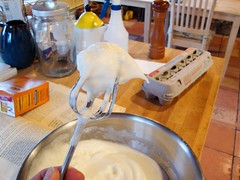
One note about beating egg whites: Many recipes that call for beating egg whites terrify the reader with cautions to not let a drop of fat or yolk touch the whites. They warn that that will result in whites that will not beat up to a full fluffiness. While I'm not saying you shouldn't be careful to keep your white clean, don't freak out about it. See these whites? I dropped some yolk in there while I was separating the eggs and decided to press on. Beautiful fluffy whites!

If you don't know how to separate eggs, I refer you to this video on How2Heroes.

This recipe looks long, but it really should only take you about 10 minutes to put into the oven. The more you do it, the faster you get.

Spinach Souffle
Serves 4-6
A note on baking dish sizes: Julia recommends a traditional souffle dish: 6" across and 4" high. You'll need to put a parchment paper or aluminum foil collar on that dish to ensure that the souffle doesn't overflow. I use a dish that's just large enough to hold the batter. By not using a collar and using a large-enough dish, I get a good rise on the souffle without having the build a collar. For safety's sake - I always bake on a baking sheet in case it rises higher than I expected.
  • 3 tablespoons butter
  • 4 tablespoons flour
  • 1 1/2 cups milk
  • 1/2 teaspoon salt
  • pinch of nutmeg, optional
  • 1/2 teaspoon freshly ground pepper
  • 6 eggs, separated
  • 2 egg whites
  • 1 1/2 cups finely chopped cooked spinach, squeezed as dry as possible
  • 2 ounces parmesan cheese (Use 4 ounces if you're making a cheese souffle. I like cheddar, or a cheddar/parmesan mix - just keep the flavors on the stronger side)
  • butter for greasing baking dish
  • extra grated cheese for sprinkling over the top
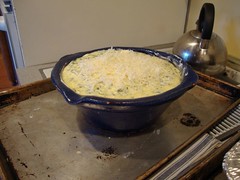
Preheat the oven to 375 and set the oven rack to the lower middle rung. Grease a baking dish and set it on a baking sheet.

Melt the butter in a medium saucepan. Add flour and stir well with a whisk until smooth. Whisk in the milk gradually until it is all added in. You're making a thick white sauce, the whisking is essential as you don't want any lumps in the sauce. By adding the milk gradually you keep the sauce smooth. Check the seasoning on the sauce and add salt and pepper as needed.

Whisk the egg yolks into the sauce you've just made. Stir in the chopped spinach.

In a large bowl, beat the egg whites until they form soft peaks. Using a rubber spatula fold 1/4 of the whites into the sauce. Fold the now lightened sauce into the rest of the whites. As you're folding the sauce and whites together, sprinkle the cheese over the bowl, and fold the cheese in as well.

When everything is folded gently together pour it into the baking dish and sprinkle some additional cheese over the top.

Bake for 30-40 minutes until the souffle is well puffed and browned. If you're baking in a very thick dish (like I did this time - the dish's sides are easily 3/4" thick), this will slow down the baking and you may want to go longer: about 40-50 minutes.

Pull the puffed, lovely souffle from the oven and serve. If when you're served up you realize that the souffle isn't cooked through (might look raw) - don't despair. Spoon off the cooked layer and serve that. Just put the souffle back into the oven and cook for another 10 minutes or so, then just serve up a second course of souffle!

Monday, March 16, 2009

A Savory Bread Pudding

My mother-in-law sent us home from the holidays with a whole lotta challah (L: thank you again!). One loaf went into french toast production, as to be expected, but the other loaf has been sitting in the freezer waiting for me to get my act together.

I had an exceptionally good dessert bread pudding (butterscotch with salted caramel) at Eastern Standard a few weeks ago and it got me thinking about bread puddings in general. After reviewing recipes, I thought a savory option would be nice to try. Of course, I realized that I had already made a savory bread pudding before, I had just called it "strata".

So bread pudding or strata or whatever you want to call it, this is a great way to use up bits of vegetables, stale bread and ends of cheese. I used asparagus, caramelized onions, dill and goat cheese in this one. I can vouch for the breakfasty deliciousness of a sausage, ham and cheese version (thanks Doug!).

As I mentioned, I used challah in this version, but any delicious bread will do. It should be stale to keep things from getting too soggy. If your bread is too fresh, cut it into cubes and bake it in a 300-degree oven for about 10 minutes.

Savory Asparagus and Caramelizd Onion Bread Pudding
Serves 6-8 as a main course, more if served as a side dish
  • 2 onions, peeled and sliced thin
  • 1 large bunch asparagus, ends snapped off, stalks sliced into bite-sized pieces
  • 1/4 cup minced dill or parsley
  • 4 cups of 1-inch bread cubes
  • 1/2 cup goat cheese, crumbled
  • 5 eggs
  • 2 cups milk
  • 1/4 cup parmesan cheese
Preheat the oven to 375 degrees.

In a large skillet, over medium-high heat, stirring frequently, saute the sliced onion until well-caramelized (this will take about 20 minutes). Put into a large bowl and set aside. In the same pan, saute the asparagus until cooked through and bright green. Add to the onions in the bowl.

Stir together the onions, asparagus, dill, bread cubes and goat cheese. Pour into a 9x9 baking dish (you can use a large dish, the pudding will be thinner, is all). In the same bowl, whisk together the eggs and milk. Season with a little salt and pepper. Pour the milk-egg mixture over the bread cubes in the baking dish (the dish should not be full to the top as the pudding will puff up to almost double its pre-baking height). With a spoon or spatula, push the cubes into the milk mixture. Let the dish sit for 15 minutes and then sprinkle the parmesan over the top.

Bake for about 45 minutes until browned and puffy. Let sit for about 10 minutes before serving (it will be insanely hot in the center when it first comes out).

Note: This can be made ahead (up to baking it) and held in the refrigerator overnight. The bread will soak up all the liquid, but don't worry. Cover with foil and bake at 375 for 30 minutes, then uncover and bake for another 15-30 minutes (until hot all the way through).

Friday, August 29, 2008

Skillet Souffle

I was going to make a souffle for dinner but I waited too long to get started on supper. I remembered this recipe and thought it might work instead.

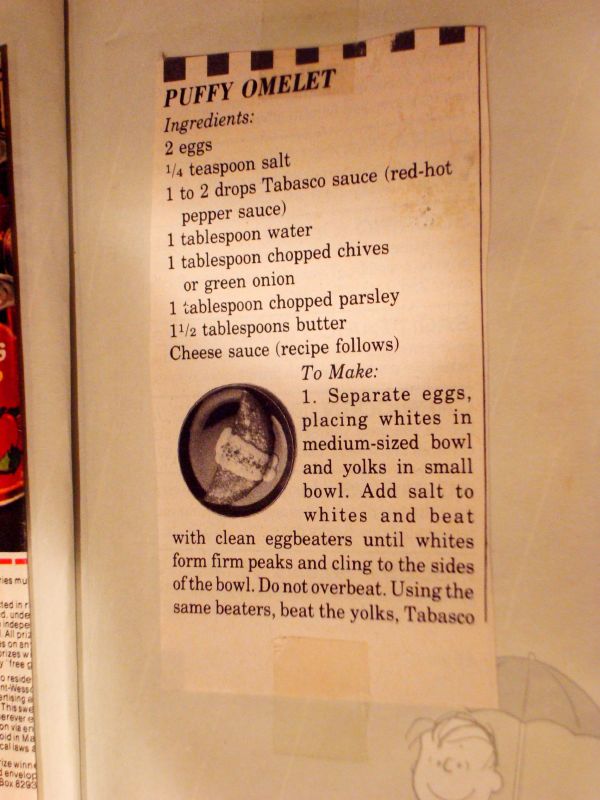
This recipe is one I must have clipped back in the early eighties (I think it's from Young Miss magazine and it's in my first "Recipe Book", taped next to a cookie recipe from a 1978 issue of Family Circle). You make it by whipping egg whites to stiff peaks and then folding in the egg yolks, herbs and salt and pepper. You then pour a cheese sauce over the omelette. (I used to make this version for myself in junior high and high school.) To make it lighter and simpler, I thought I would just fold the cheese into the eggs instead of making a sauce.

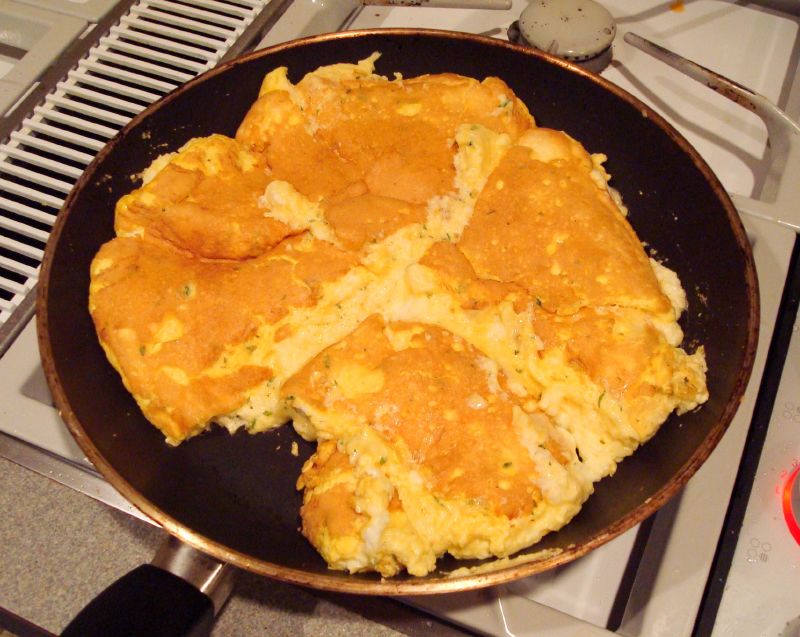
This version worked well. It was much faster than a traditional souffle and I'll definitely be trying this method out with other cheeses (I used cheddar today) and will also try adding in more flavors (like finely chopped spinach or ham). This omelette will be a lot prettier if made in a small skillet. I used a 10" skillet to make enough for two. It worked out ok, but I lost some beauty points since I had to flip the omelette in four pieces.

Skillet Souffle (Puffy Omelette)
Serves 2-3
  • 4 eggs
  • 1/2 cup grated cheese (nothing too runny: cheddar, Monterey jack, or parmesan are all good choices)
  • 2-3 tablespoons minced herbs (parsley, thyme, rosemary, chives, cilantro, etc.)
  • pinch of cayenne or dash of Tabasco
  • 1 tablespoon butter or olive oil
  • salt and pepper to taste
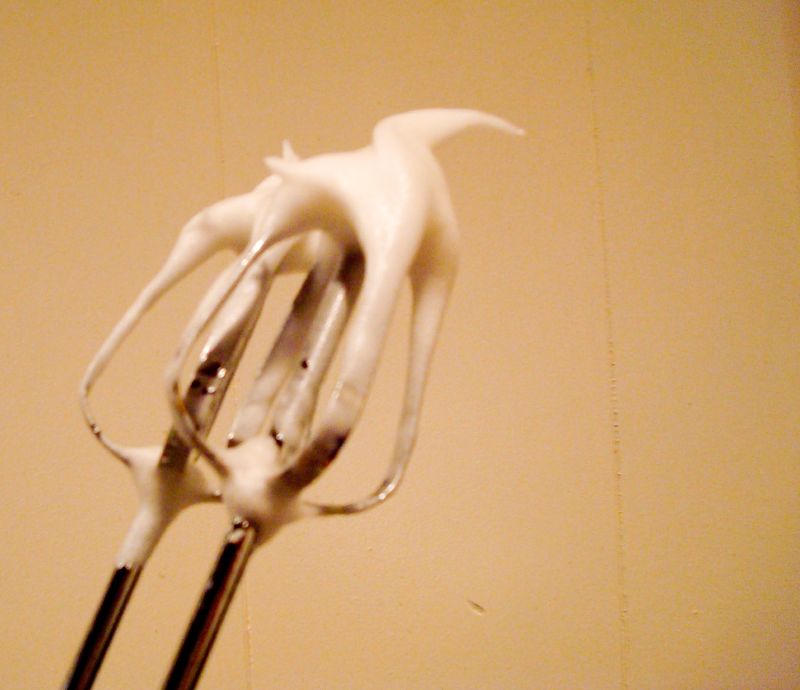
Separate the eggs, placing the whites in a large bowl and the yolks in a smaller bowl. Using an electric mixer, or a strong arm and a whisk, beat the whites to stiff peaks. (See picture to the right.)

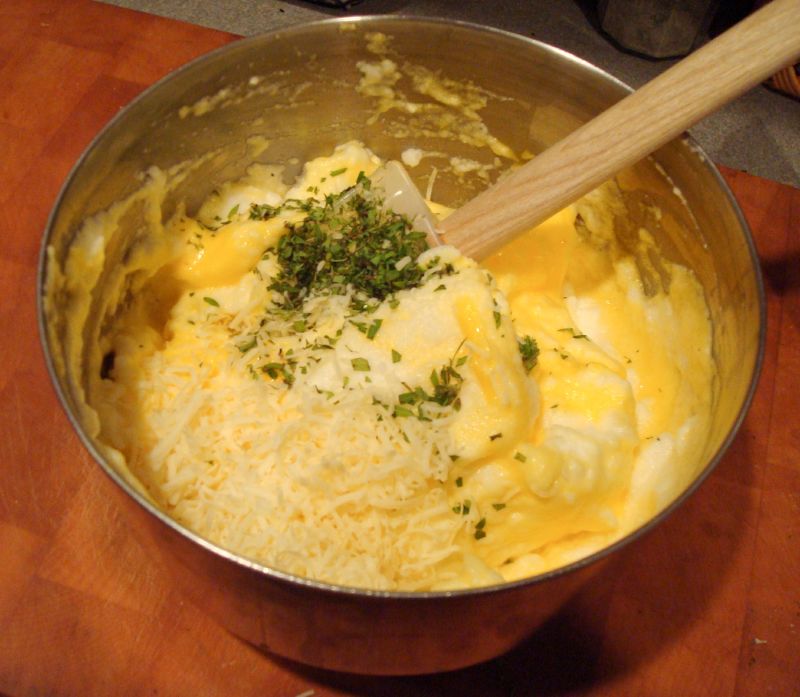
Gently beat the yolks with a pinch of salt and few grinds of pepper. Fold the yolks, grated cheese and herbs into the whites.

Meanwhile heat a non-stick 10" skillet over medium heat. Add the oil or butter to the skillet. Heat the skillet is hot, pout the egg mixture into the pan. Cook for 1-2 minutes, until the bottom of the omelette is set.

Now the hard part: flipping the omelette. I had to cut the omelette into four pieces with my spatula and then flip each one. This resulted in a relatively unattractive presentation. (What I will try next time is sliding the omelette onto a plate, inverting the skillet over the plate, and flipping.) Cook for another 3-5 minutes, depending on how firm you like your eggs (for a souffle-like texture, go for the shorter cooking time).

This makes a very nice supper for two or three people. If you're dining alone, make a half portion in a 6" or 8" skillet.

Monday, June 23, 2008

Farm Fresh Eggs in Your Kitchen

I have been using locally produced, straight-from-the-hen eggs for a while now. I am very fortunate to live near several folks who keep flocks of chickens. My primary egg source has a pretty large flock of layers this year, so I have been enthusiastically reaping the benefits.

A lot of people are trying to find and use local eggs these days, and I strongly encourage you to do so. They are usually similar in price to the "cage free" eggs you can find at you supermarket and the quality is significantly better. In my area, I pay between $2 and $3 for a dozen eggs, which is a significant value considering the "cage-free" eggs I get at the supermarket cost at least $3.99.

Egg-based Dishes
Poached, scrambled or omeletted, truly fresh eggs will behave better than the eggs you're used to. They sit up higher in the pan, the whites are tighter and won't spread through your poaching water. And souffles ... oh ... your souffles will rise higher and will be so much more delicious and golden.

Hardboiled eggs can be a little frustrating (albeit more delicious). HB eggs are easier to peel when they are "older": a pocket of air forms between the shell and the membrane holding the egg itself. The older the egg, the larger this pocket and the easier it can be to peel the egg. That said, a farm-fresh egg held in your fridge for a week before boiling will still be weeks fresher than what you get at the supermarket.

Baking Issues
The major challenge that these eggs have posed for me has been in baking. When you buy eggs at the supermarket, you buy a carton of "large" or "extra large" or "jumbo". Well chickens don't lay only one size egg. So, your farm-fresh carton may contain eggs of many sizes.

These eggs are from the same carton. No problem for scrambled eggs or an omelette, but a significant issue if I want to bake a cake.

If you intend to bake with your eggs, you need one or two pieces of special equipment. Don't worry - you probably have one of these items, and really should own the other.

You need a scale. Don't own one? You should, you really should. Trust me. A relatively inexpensive one is here.

You also need a measuring cup that shows ounces and/or tablespoons. I like this one.

Most baking recipes call for eggs that are graded "large." A large egg weighs 2 ounces in the shell. So you can weigh the eggs from your carton and use the ones that weigh 2 ounces for baking. Easy, sure. But if your eggs are like mine, you seldom have enough 2-ouncers in the carton and therefore you need to measure eggs by volume.

A large egg out of the shell is about 3 tablespoons: 2 tablespoons of white and 1 of yolk. A tablespoon is 1/2 an ounce by volume, therefore 1 large egg = 3 tablespoons = 1.5 ounces. As eggs get larger, the volume of yolk and whites goes up proportionally (in general).

I will say that frequently the yolks in my fresh eggs are much larger than those in a supermarket egg. Some if you need egg whites or yolks for a recipe, make sure you what you need by volume: 1 yolk = 1 tablespoon = .5 ounce and 1 white = 2 tablespoons = 1 ounce.

So when you are ready to bake with your eggs of many sizes, take out your trusty measuring cup and crack your eggs into it.

In this instance, I needed four eggs for my recipe. (Four eggs = 4*3 tablespoons = 12 tablespoons = 6 ounces.) As you can see, three eggs fit the bill. In this case, I used the little bit of extra egg in the recipe, if you need to be super exact, just beat the eggs and pour off the extra.

Happy cooking!